
Scottsdale, AZ
Memory care that keeps every day calm, steady, and familiar.
For someone with dementia, a big, busy place with strangers coming and going makes everything harder. A quiet house with the same people every day is a big part of what actually helps.
Why small matters more here
Fewer people, fewer surprises, fewer hard days.
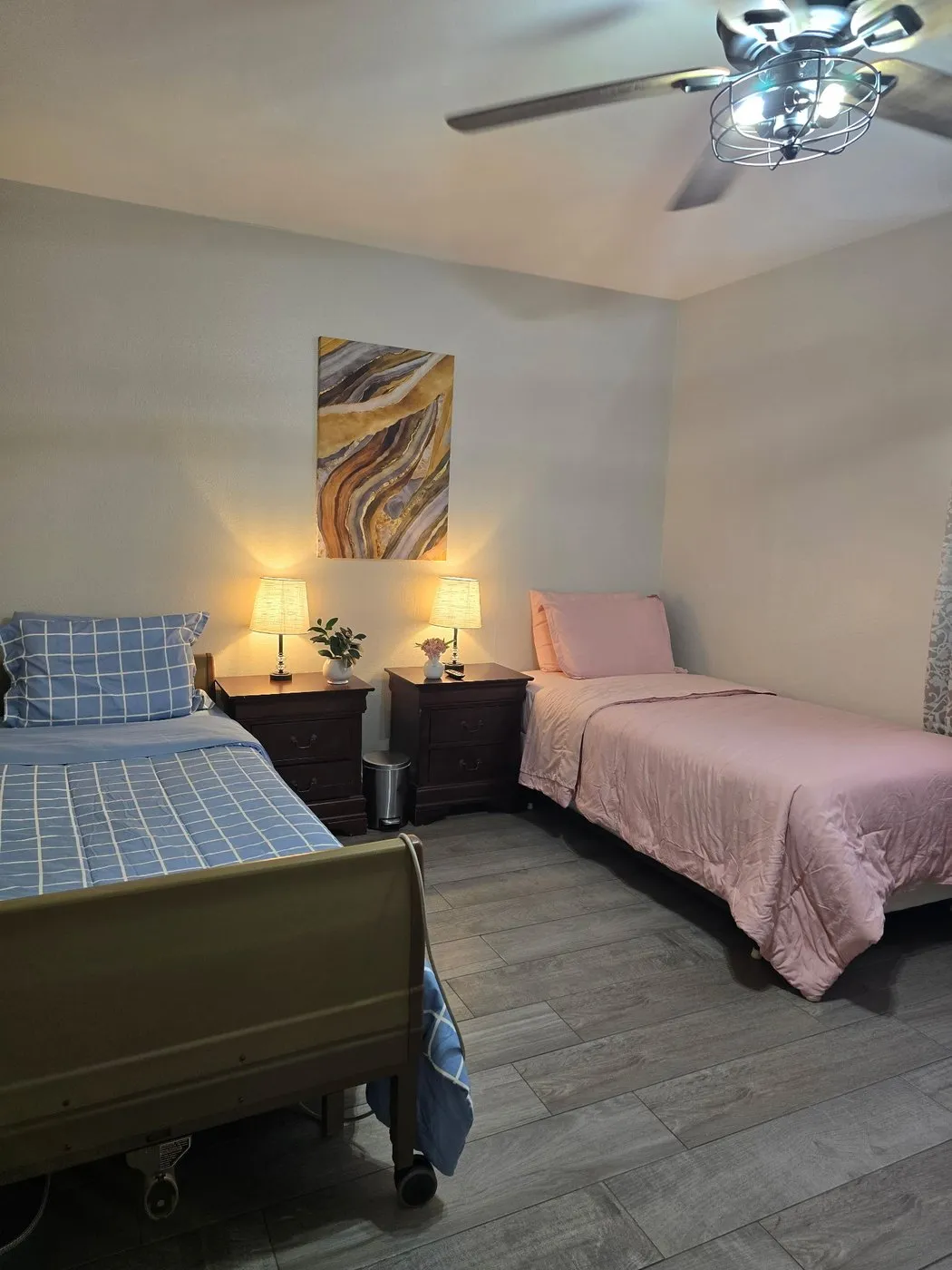
Big memory care units are secure, and that matters. But they’re also loud and bright, with a lot of unfamiliar faces coming and going on rotating shifts — and for someone whose short-term memory is failing, every one of those things adds confusion and can tip into agitation.
A house licensed for ten is a smaller world. The same caregivers come every day, so they become familiar even when a name won’t come. There are fewer halls to get lost in and less noise to startle. And with this few people, we notice early when someone’s starting to get upset — while a gentle redirect still works, and before it turns into a hard afternoon.
Our approach
The same rhythm, every day.
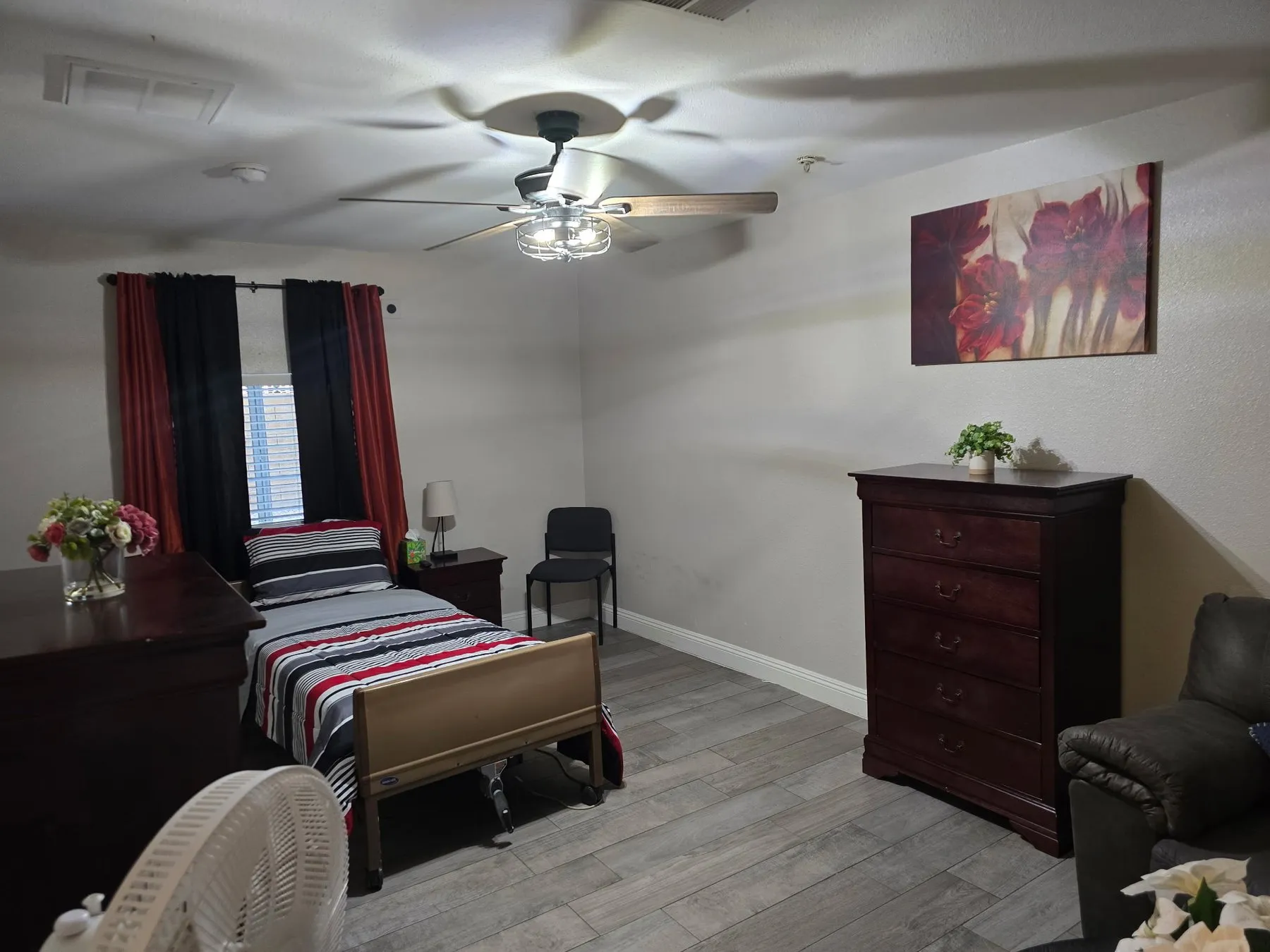
Days run the same way each day. Meals at the same table, around the same time, in the same seats. When memory can’t do the work anymore, routine does it instead.
- The same caregivers, so faces stay familiar
- The same daily rhythm, kept deliberately steady
- Redirecting instead of correcting — we don’t argue with someone about what year it is
- Photos and personal things kept where they can be seen
- Quiet evenings, with extra attention around sundowning
Safety
Secure, without feeling locked in.
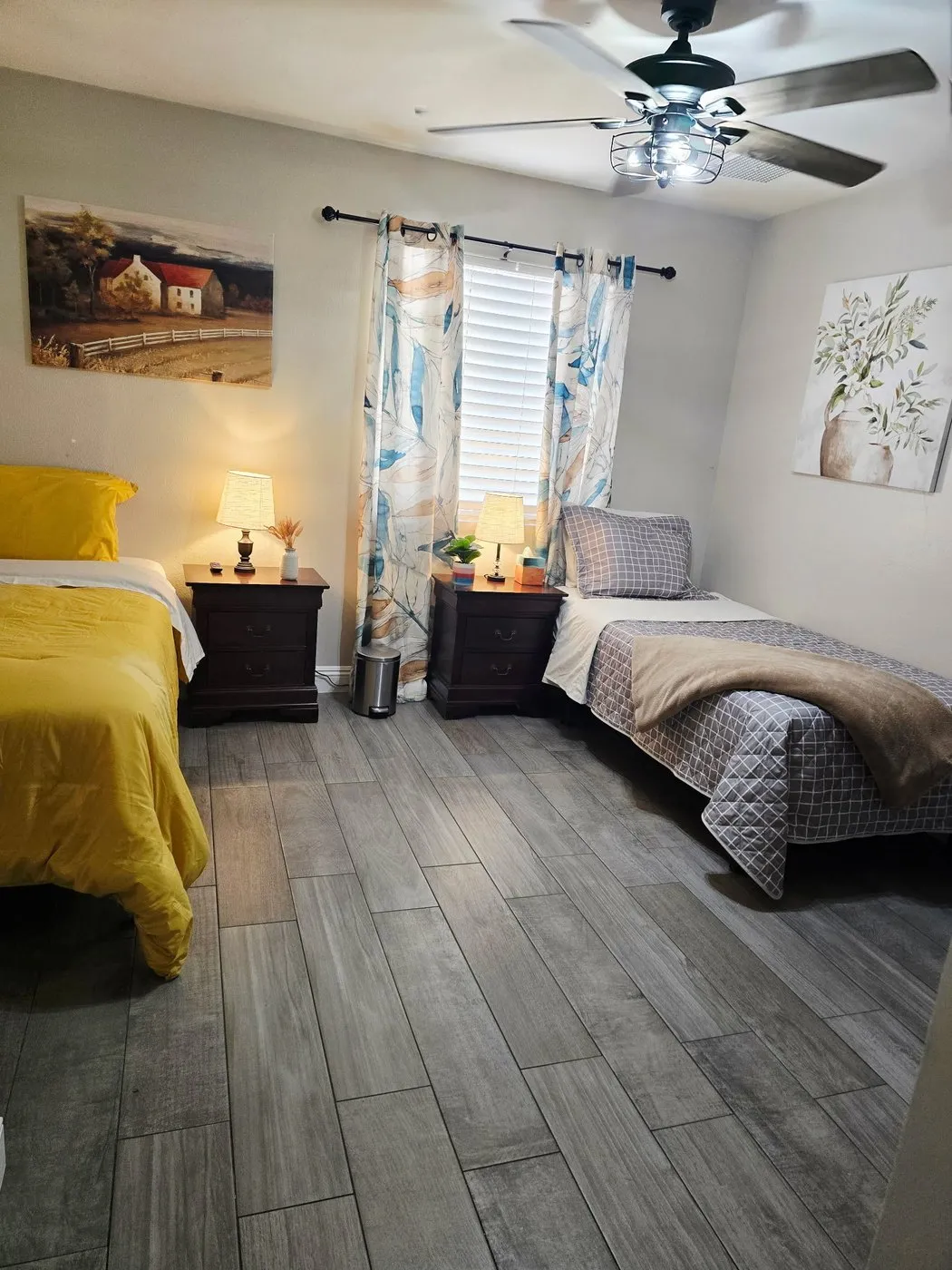
The house is monitored and secured so that someone who wanders can’t leave unnoticed, and staff are awake and here overnight. Everything is on one level, which takes away the most common cause of serious falls.
Because it’s a home and not a locked wing, most of that security is invisible to the people living here. That matters — feeling confined is itself a trigger for agitation.
Being honest about fit
When we’re not the right fit.
We’d rather tell you this now than after a move. A small home is a great setting for most people with dementia, but not for everyone. If someone is regularly physically aggressive toward others, needs behavioral stabilization, or needs skilled nursing around the clock, a specialized facility will take better care of them than we can.
Come visit, tell us honestly where your family member is, and we’ll tell you honestly whether we’re the right place. If we’re not, we’ll help you find what is.
Bring every question you have.
Most families looking at memory care are doing it for the first time, usually in a hurry, and often feeling guilty about it. You don’t have to have it figured out. Come ask us whatever you need to.