Doctors, therapists, hospice nurses, dentists, podiatrists and more visit residents here at the house. We handle the scheduling and the follow-up so your family doesn’t have to.
For an older adult, a routine appointment is rarely routine. It’s a
transfer into a car, a drive, a parking garage, a waiting room, and a
long trip back — and often a day or two of being wrung out afterwards.
More than a few families end up skipping things that matter because the
trip costs more than the visit is worth.
So we bring the providers here instead. Some of these teams are ones
we’ve worked with for years; others are whichever agency or physician
your family already uses and trusts. Either way, the coordination is
ours: we book the visit, let them in, tell them what we’ve actually
been seeing day to day, and pass back what they say.
A note on what these are. Latham is licensed as an assisted living
home. The teams below are independent, separately licensed providers
who visit — we coordinate their care, we don’t deliver it ourselves.
Most are billed through Medicare, Medicaid, or the resident’s own
insurance rather than through us. We’re glad to explain how any one of
them would work in your situation.
Care teams
Medical Services
Clinicians who come to the house rather than making a frail person sit in a waiting room. We handle the scheduling, let them in, brief them on how the week has gone, and pass what they say back to you.
Hospice Care
End-of-life care delivered here, in their own room.
Hospice is a service, not a place. When someone begins hospice, the agency your family chooses sends nurses, aides, a social worker, and a chaplain to wherever that person lives — and here, that is the house they already know.
Our caregivers keep doing everything they were already doing. The hospice team adds comfort and symptom management on top of it, and the two teams talk to each other directly so you are not stuck in the middle passing messages.
We work with any licensed hospice agency you choose
They stay in their own room, with their own things
Family visiting matters more than ever at this stage, and we work with you on it
Comfort and symptom relief, without giving up treatment.
Palliative care is the one families most often have never heard of, and the one that helps soonest. It is specialist care for the symptoms of a serious illness — pain, breathlessness, nausea, exhaustion, the anxiety that rides along with all of it — and unlike hospice it does not require anyone to stop treatment or accept a prognosis.
A palliative team can start years before hospice would be on the table. They visit here, adjust medications, and spend the kind of time on the hard conversations that a fifteen-minute appointment never allows.
In-Home Primary Care Physician
The doctor comes to them.
Getting an older adult to a routine appointment can take a family most of a day — the transfer, the drive, the parking, the waiting room, the drive home, and someone exhausted at the end of it. A house-call physician removes the whole production.
The doctor examines them here, reviews medications with our caregivers standing right there, and orders what is needed. Because our staff see the person every day, the doctor gets a far more honest picture than the one that comes out of a good day in an exam room.
Home Health Care
Skilled nursing and therapy after a hospital stay.
When someone comes back from a hospital stay, a fall, or a surgery, a doctor can order home health — short-term skilled care delivered right here rather than at a rehab facility. A nurse manages wounds, new medications, and vitals. Therapists do the work of getting strength and function back.
It is usually covered by Medicare when a physician orders it, and it happens in the room they already sleep in. We coordinate the visits, keep the exercises going between them, and tell the therapist what we are actually seeing day to day.
Physical therapy — balance, walking, strength, fall recovery
Occupational therapy — dressing, bathing, and the everyday tasks that make independence real
Speech therapy — speech, cognition, and swallowing after a stroke or with a progressive illness
Skilled nursing — wound care, injections, medication changes, monitoring
Mobile Dental Care
Cleanings, exams, and denture work at the kitchen table.
Dental care is the first thing to quietly fall off the list once driving stops, and it costs people more than families expect — an ill-fitting denture or an abscessed tooth turns straight into weight loss and infection.
A mobile dental team brings portable equipment into the house for cleanings, exams, x-rays, extractions, and denture fitting and repair. Nobody has to be moved into a car or lifted into a dental chair.
Podiatry Service
Routine foot care, which matters more than it sounds.
For a diabetic, or for anyone who can no longer reach their own feet safely, foot care is not cosmetic. A trimmed nail or a caught pressure sore is the difference between a normal week and a hospital admission.
A visiting podiatrist handles nail and callus care, checks circulation and sensation, treats ingrown nails and ulcers early, and advises on footwear.
Mobile Labs & X-Ray
Bloodwork and imaging without leaving the house.
When a doctor wants labs or a chest film, a mobile team comes here and does it in the resident’s own room. No ambulance transfer, no waiting on a gurney in a hallway, no confusion from being somewhere unfamiliar.
Blood draws, urine cultures, portable x-ray, and EKG are all done on site, and results go straight to the ordering physician — which usually means an answer the same day instead of the following week.
In-House Dialysis Coming soon
Treatment here instead of three trips a week to a center.
Outpatient dialysis is punishing for an older adult — transport three times a week, hours in a chair, and a day of recovery afterward that eats most of what is left of the week.
We are working on being able to support dialysis here in the house. It is not available yet, and we would rather say that plainly than let a family plan around something that is not ready. Ask us where it stands when you visit.
Care teams
In-Home Services
The parts of a week that are not medical at all, and that people miss most when they lose them — looking like themselves, practicing their faith, and getting out of the house.
Mobile Salon
A haircut, a set, and a bit of dignity back.
A stylist comes to the house for cuts, shampoos and sets, color, and shaves. It sounds like a small thing next to medication management, and it is not. People sit up straighter after a haircut.
For someone who kept a standing Friday appointment for forty years, having that continue is one of the clearest signals that they are still themselves and still worth the trouble.
Clergy, communion, and services that come to them.
Losing the ability to drive usually means losing a congregation, and for someone who has gone every week for decades that is a real bereavement on top of everything else.
We arrange visits from clergy and lay ministers of whatever faith a resident practices — communion, prayer, scripture reading, or simply the company of someone from their own tradition. We are glad to work with the church, synagogue, or temple your family already belongs to.
Transportation Services
Rides to the appointments that cannot come here.
Most care can be brought into the house, but not all of it. Specialists, procedures, imaging that needs a machine too big to move — those still mean going out.
We arrange transportation, including wheelchair-accessible vehicles, and coordinate the timing so someone is ready when the driver arrives and there is a caregiver waiting when they get back. Families are welcome to drive their own relative instead, and many prefer to.
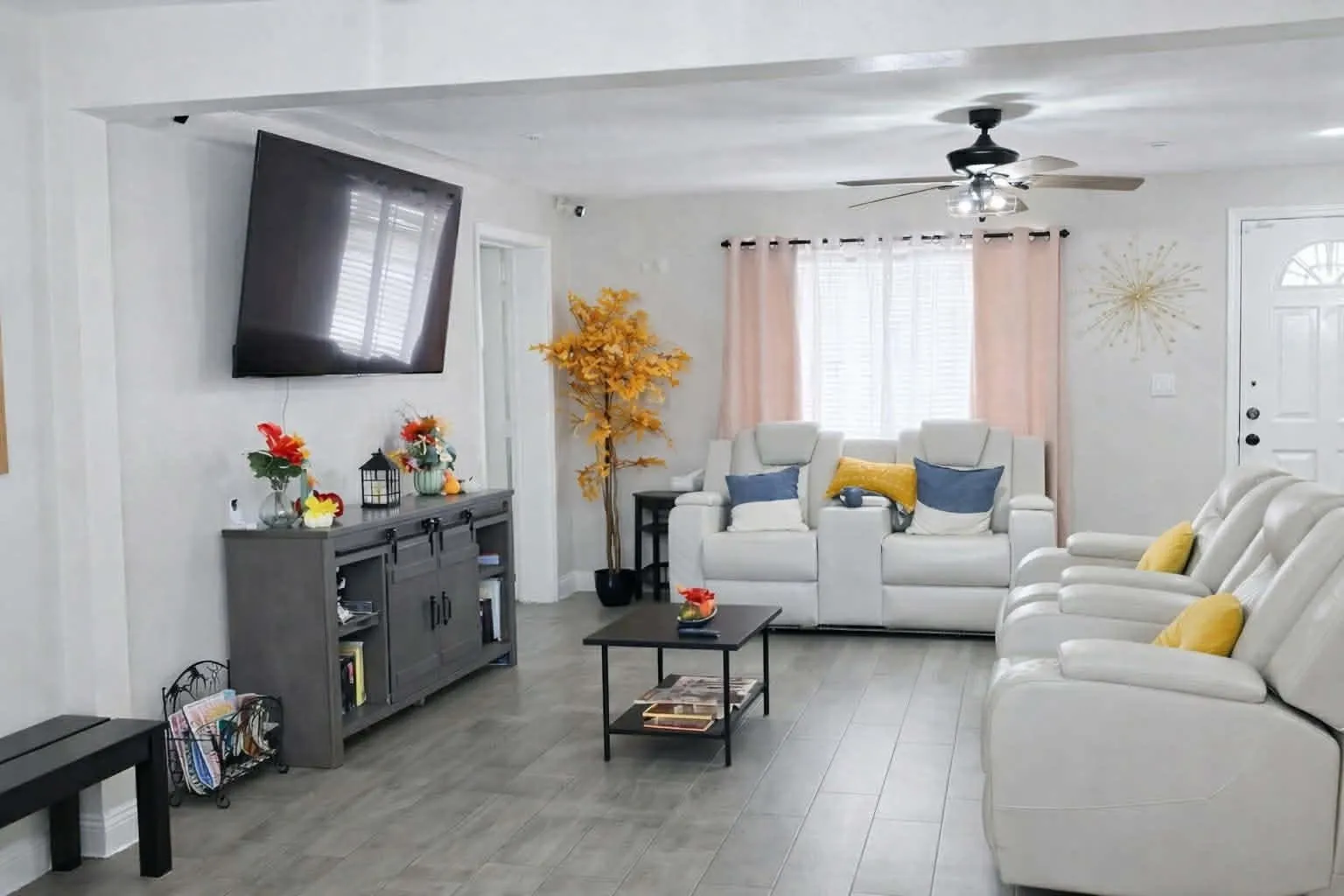
The living room, where most of the day happens
How we keep it straight
One house, one set of notes, one phone call.
The reason care at home falls apart is almost never the care itself —
it’s the seams between providers. The therapist doesn’t know what the
doctor changed. The pharmacy doesn’t know about the new prescription.
Nobody tells the family until something goes wrong.
Because everything happens in one house with the same caregivers
present, those seams mostly disappear. Our staff are in the room for
the visits, they write down what was said, and they carry it into the
next one. When something changes, you get a phone call from a person
who was standing there.
Want to know if a specific service is available?
Ask us. Some of these are arranged in a day and some take a bit of setting up, and a few depend on what your relative’s insurance covers. Call and we’ll tell you plainly what’s realistic.